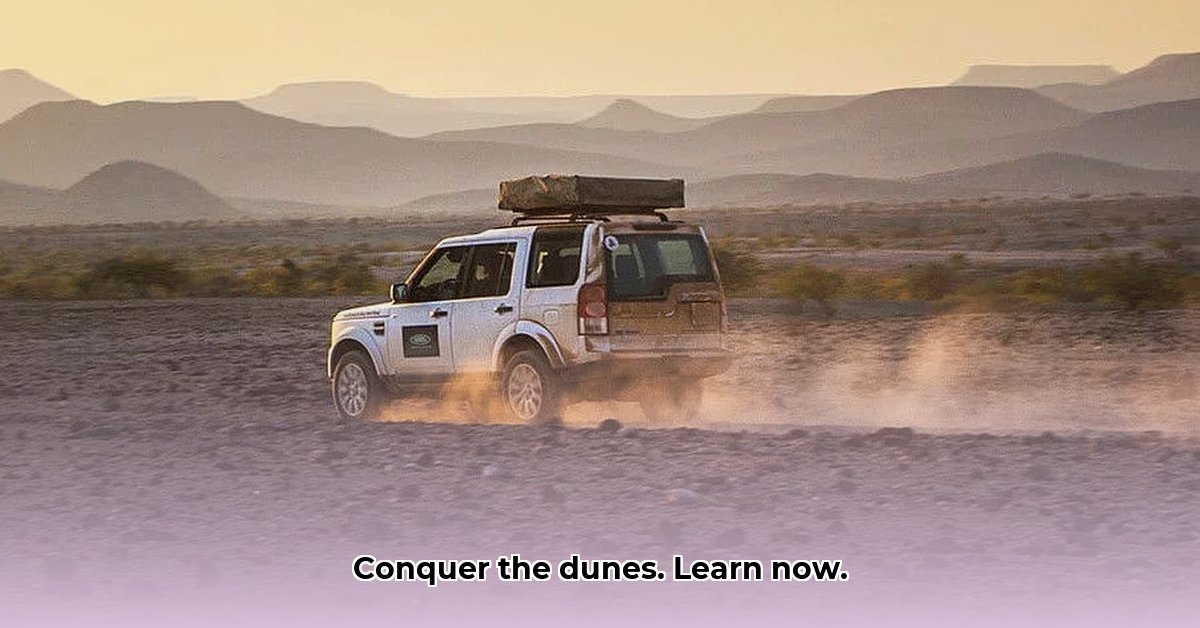
Hitting the beach or tackling towering dunes in your vehicle? Driving on sand is an adventure, but it demands respect and preparation. This isn't your average Sunday drive; it's a thrilling challenge requiring knowledge and smart techniques. Let's get you ready to conquer those sandy landscapes!
Preparing Your Ride for the Sands: Pre-Trip Checklist
Before you fire up the engine, ensure your vehicle is ready for sand's unique demands. It's like preparing for a serious hike—you wouldn't go unprepared, right?
Tire Pressure Adjustment: This is crucial. Lowering tire pressure increases the contact patch, improving traction. Reduce pressure by 10-15 PSI from your pavement pressure; however, always consult your owner's manual. Use a reliable gauge for accuracy. Don't guess! (A reliable tire gauge ensures accurate deflation for optimal traction.)
Fluids Check: Check engine oil, coolant, transmission fluid, brake fluid, and power steering fluid (if applicable). Top off if needed. Low fluids risk overheating, especially in sand. (Maintaining optimal fluid levels prevents overheating and potential mechanical failures.)
Gear Up: Pack a recovery kit: a sturdy shovel, sand ladders or recovery boards, and potentially a winch. A high-lift jack and an air compressor are also invaluable. (A comprehensive recovery kit significantly increases your chances of self-rescue.)
Personal Safety: Wear sturdy shoes, long pants, a long-sleeved shirt, sunglasses, and sunscreen. A hat protects your face from the sun. (Protecting yourself from sun exposure and debris is crucial for a safe and comfortable experience.)
Beach Driving Basics: Gliding on the Shore
Driving on a hard-packed beach is simpler than tackling dunes, but it still demands a different driving style.
Maintain Momentum: Keep moving; sudden stops or turns lead to getting stuck. Think gliding—smooth and continuous. (Maintaining momentum is crucial for preventing wheelspin and getting stuck.)
Consistent Speed: Avoid jerky acceleration or braking. Smooth, gradual inputs are key. (Smooth driving prevents sudden losses of traction in soft sand.)
Higher Gears: Use higher gears to reduce wheel spin and maintain momentum. (Higher gears reduce wheel slippage and maintain speed on firm sand.)
Losing Traction?: If wheels slip, gently ease off the accelerator. Don't slam on the brakes! (Gentle deceleration prevents wheel spin and tire digging.)
Awareness: Watch for softer sand patches or hazards like rocks. (Awareness of the terrain allows for proactive driving adjustments.)
Dune Warfare: Taming the Giants
Dune driving is a different beast. Your preparation and skills are truly tested here.
Momentum is King: Gain enough speed to climb without losing traction. (Sufficient momentum is needed to overcome the incline and soft sand.)
Gear Selection: Low-range 4WD often provides the best traction, offering maximum torque. High range might be preferable in other conditions; experiment to find what works for you. (Low-range 4WD typically provides the best control when ascending and descending dunes.).
Choosing Your Path: Inspect the dune; pick a gradual slope to avoid getting stuck. (Selecting the appropriate path significantly reduces the risk of getting stuck.)
Smooth Ascent: Avoid abrupt changes in speed or braking; ascend consistently. (A steady ascent prevents wheel spin and loss of momentum.)
Witch's Eyes: Watch for hidden dips or holes that can trap your vehicle. Avoid them whenever possible. (Witch's eyes are significant hazards that can easily immobilize a vehicle.)
Descending: Descending is trickier. Use low range, follow the fall line (the steepest line of descent), and gently apply brakes to control speed. Never let your speed get out of control. (Controlled descents prevent excessive speed and potential rollovers.)
When Things Go Wrong: Recovery Strategies
Even experienced drivers get stuck. Knowing how to recover is essential.
Assess the Situation: Don't panic. Assess how deeply you're stuck and the surrounding terrain. (Proper assessment guides the best recovery strategy.)
The Shovel: Dig out sand in front of and around tires to gain traction. (Shoveling provides immediate traction improvement.)
Sand Ladders/Recovery Boards: These increase traction; place them strategically. (Sand ladders/boards significantly improve traction when stuck.)
Winch: A winch can be necessary, but requires a secure anchor point. (Using a winch requires a solid anchor point. Attempting it recklessly could make the situation worse.)
Call for Help: Don't hesitate to call for assistance if seriously stuck. (Calling for help is essential in extreme situations.)
Responsible Sand Driving: Respecting the Environment
Sand driving should be fun and safe, but also environmentally responsible.
Stay on Designated Tracks: Avoid sensitive areas to protect fragile ecosystems. (Respecting designated routes minimizes environmental damage.)
Minimize Wheel Spin: Excessive wheel spin causes erosion. (Minimizing wheel spin reduces environmental impact.)
Pack It In, Pack It Out: Leave no trace. (Responsible waste management protects the environment.)
Respect Wildlife: Observe animals from a distance. (Showing consideration for wildlife ensures preserving their natural habitat.)
Know the Rules: Familiarize yourself with local regulations and restricted access areas. (Adhering to rules is essential for responsible sand driving.)
Gear Up for Sandy Adventures: A Detailed Checklist
(A complete checklist ensures you're well-prepared for any sand driving challenge.)
| Gear Item | Description | Necessity Level |
|---|---|---|
| Tire Pressure Gauge | For accurate pressure checks | High |
| Shovel | For digging yourself out | High |
| Sand Ladders/Recovery Boards | Significantly improves traction when stuck | Medium |
| Winch | For serious recoveries (requires a secure anchor point) | Medium-High |
| High-Lift Jack | For lifting and repairs | Medium |
| Air Compressor | For re-inflating tires | Medium |
| First-Aid Kit | Essential for any off-road adventure | High |
| Navigation Tools | Map, compass, GPS | High |
| Communication Device | Satellite phone or two-way radio | High |
Remember, safe and responsible sand driving ensures everyone can enjoy these spectacular landscapes. Enjoy the ride!